Review: Under the Sea Layered Card for Embroidery Projects
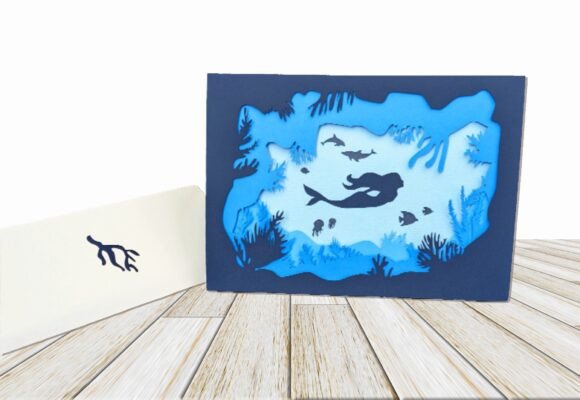
As a designer who spends more time staring at stitch simulations than actual ocean waves, I am always skeptical when a product labeled as a "card" crosses my digital desk. Usually, these are flat vector files meant for paper crafters, not us needle-and-thread folks. However, the Under the Sea Layered Card from Bella Carta Design caught my eye not because of its intended purpose as a Greeting Cards template, but because of its potential as a high-value embroidery project. After spending an afternoon dissecting the layers and running test stitches on various fabrics, I have some practical thoughts on how this 3D SVG asset translates into the world of commercial embroidery and handmade goods.
First Impressions: From Paper Layers to Stitch Density
When you first open the file, the mood is immediately whimsical and serene. The design features classic undersea elements—likely shells, coral, or marine life arranged in a way that suggests depth. For a paper crafter, these layers create a pop-up effect. For an embroiderer, these layers represent an opportunity to play with stitch density and texture. My initial reaction was that the shapes are clean and distinct, which is crucial. In embroidery, muddy details get lost under thread. Here, the separation between elements looks sharp enough to handle satin columns or dense fill stitches without bleeding into one another.
The visual personality of the Under the Sea Layered Card feels versatile. It isn't overly childish, nor is it too abstract. This balance makes it a strong candidate for a wide range of applications beyond just birthday cards. I could easily envision this working as a central motif on a boutique tote bag or a decorative patch for a denim jacket. The layout suggests a vertical composition, which naturally fits well on aprons, tea towels, or the front panel of a sweatshirt.
Real-World Application: A Case Study in Custom Apparel
To truly test the viability of this design, I imagined a specific client scenario. Let's say a local boutique owner wants a limited run of summer-themed custom apparel for their beachside shop. They need something that screams "ocean vibes" without looking like a generic tourist souvenir. This is where the Under the Sea Layered Card shines.
I selected a heather blue cotton blend sweatshirt for the test. The goal was to create a sweatshirt embroidery piece that felt premium. By treating the SVG layers as separate color blocks, I could assign different thread textures to each section. The foreground elements received a glossy satin stitch to make them pop, while the background layers were filled with a matte fill stitch to create subtle depth. The result was a finished product that looked far more expensive than the sum of its parts. Customers walking into the shop would likely be drawn to the tactile quality of the design, associating that attention to detail with the brand's overall value.
Beyond apparel, this design is a natural fit for home decor. Imagine this stitched onto a linen pillow cover for a nursery or a coastal-themed living room. The layered nature of the original SVG allows the embroiderer to mimic dimensionality even on a flat surface. If you are an Etsy seller looking to expand your catalog beyond standard monograms, adapting this design for a set of kitchen towels or a canvas tote bag design could be a smart move. It offers a unique aesthetic that stands out in a crowded marketplace of generic sea turtles and anchors.
Navigating Technical Challenges and Fabric Choices
While the design is promising, it is not without its technical demands. One must be careful when translating a 3D SVG intended for paper cutting into a machine embroidery design. Paper doesn't fray; fabric does. The smaller, intricate corners found in coral or shell details require precise digitizing. If you are using this as a base for your own digitizing work, pay close attention to the stitch density in those tight areas. Too many stitches on a small scale can cause the fabric to pucker or the thread to break.
Fabric selection is also critical. This design would struggle on highly textured fabrics like heavy wool or loose-weave linens unless properly stabilized. The fine details might get lost in the weave. Similarly, stretchy fabrics like jersey knits require a robust stabilizer strategy. Without it, the layered elements could shift during washing, ruining the alignment that gives the design its charm. I would also advise caution with dark fabrics. The original concept relies on layering for contrast; on black fabric, you will need to carefully select thread colors that provide enough luminance to keep the layers distinct. A test run on scrap fabric is non-negotiable here.
Curved surfaces present another hurdle. While this could theoretically work on a cap, the vertical layout of the Under the Sea Layered Card might distort over the front panel curve. Unless you are experienced with cap framing and adjusting designs for curvature, it is safer to stick to flat surfaces like patches, aprons, or baby clothes where the fabric remains taut and true.
Enhancing Brand Value and Customer Trust
In the world of craft business and handmade sales, presentation is everything. Using a well-structured design like this elevates the perceived value of your handmade product. When a customer receives a personalized gift featuring clear, crisp stitching and thoughtful composition, it builds trust. They see that care went into the creation process. This is particularly important for commercial embroidery projects where consistency is key. If you are selling these as design assets or finished goods, the professionalism of the stitch-out directly impacts buyer engagement.
Furthermore, the versatility of the theme allows for seasonal pivots. While it works perfectly for summer, a slight tweak in thread palette—swapping bright corals for deep blues and silvers—could transform it into a sophisticated holiday embroidery piece for winter gifts. This adaptability maximizes the return on investment for your digital embroidery file library.
Practical Notes for the Professional Embroiderer
Before committing this design to a client's garment, there are several steps I recommend. First, verify the licensing terms. Just because a file is sold as an SVG for cards doesn't automatically grant rights for commercial embroidery use. Always confirm with Bella Carta Design or the marketplace where you purchased it. Second, check the hoop size requirements. Layered designs often need a larger area to breathe; cramming it into a small hoop might compromise the edge details.
It is also wise to review the design in a black-and-white mockup. This strips away the distraction of color and lets you focus purely on the contrast and definition of the shapes. If the layers blend together in grayscale, they will likely lack definition when stitched, regardless of your thread colors. Finally, consider the end-user. If this is for a baby embroidery project, ensure there are no long, loose jumps or dense satins that could irritate sensitive skin. For items that will face frequent washing, like aprons or tea towels, reinforce the edges and consider a top-stitch to secure the layers permanently.
The Under the Sea Layered Card is more than just a template for paper; it is a springboard for creative embroidery solutions. With the right approach to digitizing, fabric selection, and finishing, it can become a staple in your portfolio of small shop products. Whether you are creating a one-off embroidered patch or a full line of boutique merchandise, this design offers the structural integrity and visual appeal needed to succeed in today's competitive maker market.