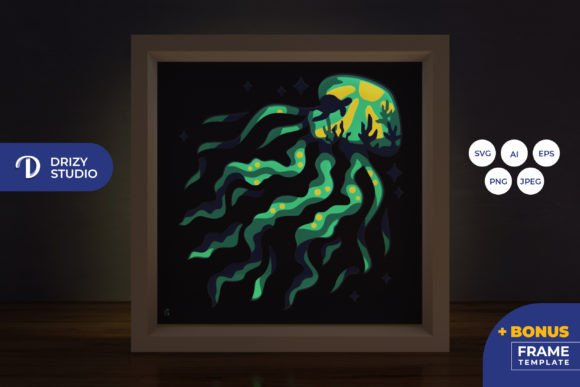
Ocean on a Jellyfish 3D Shadow Box: A Designer's Review
As a brand designer who spends most of my days refining visual identities for local businesses, I am constantly on the hunt for graphic design assets that offer more than just decoration. They need to tell a story. When I first opened the files for the Ocean on a Jellyfish 3D Shadow Box, my immediate reaction was one of intrigue regarding its depth and layering potential. This isn't just a flat illustration; it is a complex 3D SVG composition that suggests movement, fluidity, and a touch of whimsical elegance. For a small business owner looking to elevate their brand identity, this asset offers a unique opportunity to break away from standard, two-dimensional clipart.
Evaluating the Mood and Brand Personality
The aesthetic of the Ocean on a Jellyfish 3D Shadow Box leans heavily into the ethereal and organic. The layered paper-cutting style creates a sense of tactile reality that digital designs often lack. In terms of brand personality, this asset screams "handmade" and "boutique." It feels premium yet accessible, making it an ideal fit for businesses that want to convey care and craftsmanship. I could easily see this working for a high-end skincare line focusing on marine ingredients, a children's boutique with an underwater theme, or a local candle shop launching a summer collection. The mood is soft, decorative, and distinctly feminine, though with the right color palette, it could easily shift toward a bold, modern coastal vibe.
For local business owners, the emotional connection is key. This design doesn't just sit on a package; it invites the customer to look closer. That extra second of engagement is often the difference between a browser and a buyer. Whether you are running a handmade business selling soaps or a food business packaging artisanal sea salts, the depth provided by these Shadow Boxes adds a layer of sophistication that generic stock photos simply cannot match.
Practical Applications in Packaging and Marketing
So, where does this asset actually work in a real-world commercial setting? The versatility of a layered 3D SVG is immense. Here is how I would deploy this in a comprehensive branding project:
- Product Labels: Use the central jellyfish motif as the hero graphic on a circular or square label. The layers allow you to separate elements, perhaps placing the tentacles behind the text for a integrated look.
- Packaging Design: Ideal for box lids or bag inserts. The shadow box effect can be simulated in print by using varying shades of the same color to create depth without expensive embossing.
- Hang Tags and Thank-You Cards: A perfect size for hang tags on clothing or jewelry. It adds a delightful surprise when a customer unboxes their purchase.
- Social Media Graphics: The square nature of the template makes it ready-made for Instagram posts or Pinterest pins. You can animate the layers slightly for video content.
- Menu Graphics and Price Lists: For a cafe or ice cream shop, this can serve as a decorative border or a section divider, adding a cohesive theme to editorial design.
- Seasonal Campaign Visuals: Perfect for summer promotions, beach-themed events, or even holiday cards if styled with winter colors.
When used correctly, the Ocean on a Jellyfish 3D Shadow Box supports a stronger first impression. It improves product recognition by giving the brand a distinctive visual anchor. In a crowded marketplace, consistent use of such a detailed illustration across your marketing visuals builds trust. Customers perceive the brand as more professional and established when the packaging design feels intentional and polished.
Strategic Placement and Visual Hierarchy
While this asset is stunning, a professional designer knows that context is everything. This design works best as a focal point or a decorative accent. It shines on product mockups where it can be the star of the show, such as the center of a gift box lid or the main image on a website banner. It is excellent for boutique visuals where the goal is to evoke a specific lifestyle or atmosphere.
However, caution is required. This is not an asset for formal corporate branding or industries requiring strict minimalism. You should avoid using it on very small labels where the intricate layers of the 3D SVG might blur together and lose definition. It is also unsuitable for areas crowded with legal information or ingredient lists, as the decorative nature of the jellyfish could compete with important text, disrupting the visual hierarchy. If your brand relies on a luxury minimalist aesthetic with vast white space and simple serif typography, this busy, layered design might feel too ornate. Always ensure there is enough contrast between the design and the background to maintain readability.
Designer Notes for Implementation
Before committing this asset to a client project or your own small business branding, there are several practical steps I recommend taking. First, test it on real product mockups. See how the layers translate when flattened for print versus how they look on a screen. Check the black and white usage; sometimes the depth relies entirely on color gradients, so ensure it holds up in monochrome for cost-effective printing options.
Preview the design on small labels to ensure the fine details of the paper-cutting style remain crisp. Experiment with your brand colors; the default ocean tones are beautiful, but shifting to pastels or neon could completely change the vibe to suit a different niche. Compare it with your competitor's packaging to ensure you aren't accidentally mimicking a nearby shop. If you are using this for physical product sales, verify the commercial license terms explicitly. Most assets from a creative marketplace allow for unlimited end products, but restrictions on reselling the digital file itself are common.
Typography pairing is another critical factor. Test the Ocean on a Jellyfish 3D Shadow Box beside various font styles. A flowing script font might enhance the organic feel, while a clean sans serif could provide a modern counterbalance. Avoid overly decorative display fonts that might clash with the intricacy of the jellyfish. Finally, inspect the vector editability. A true SVG design should allow you to ungroup layers, change colors individually, and resize without pixelation, ensuring your professional branding remains sharp across all mediums, from a tiny sticker to a large storefront window decal.
In conclusion, this asset is a powerful tool for any creative entrepreneur looking to add depth and character to their visual presence. By treating it as a core component of your brand identity rather than just an afterthought, you can create a cohesive and memorable experience for your customers.